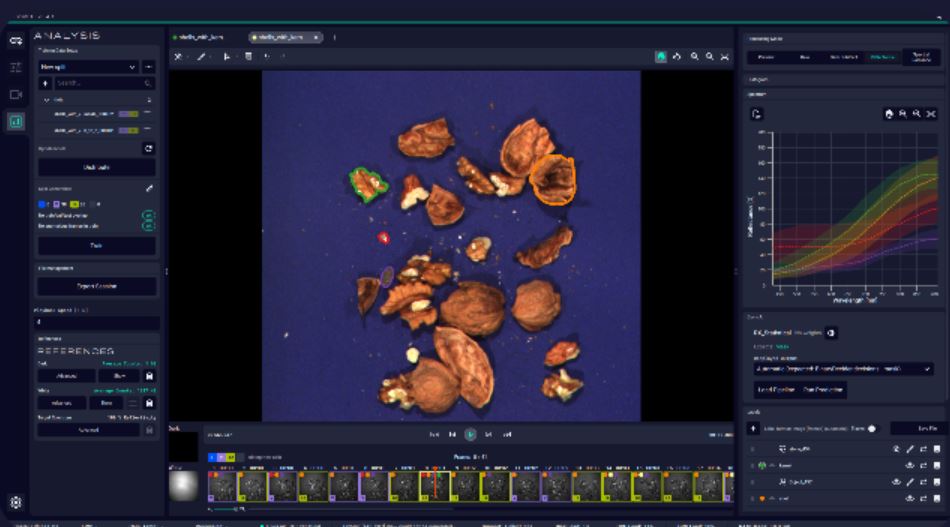
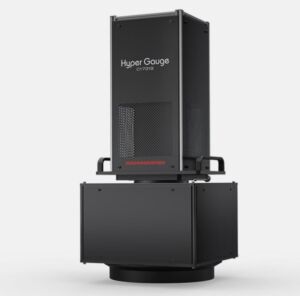
Eine neuartige hyperspektrale Kamera von Fraunhofer IPMS kombiniert eine hochauflösende 2D-Aufnahme mit KI-gestützter Echtzeitanalyse: Die KI erkennt automatisch relevante Bildbereiche (Regions of Interest), und ein integriertes Spektrometer untersucht anschließend nur diese ausgewählten Punkte, um die chemische Zusammensetzung zu bestimmen. Dadurch muss nicht mehr das gesamte Bild hyperspektral erfasst werden – Datenmenge, Energieverbrauch und Auswertungszeit sinken deutlich. Der Audiobeitrag wurde KI-gestützt erstellt und von Tido Verlag bereitgestellt.
* Diese Inhalte wurden mithilfe von Künstlicher Intelligenz erstellt und können Fehler enthalten.
In a novel hyperspectral camera developed by Fraunhofer IPMS, a conventional 2D camera first captures a high-resolution image of the object. AI analyzes this image in real time and automatically identifies the areas of interest (ROI). The integrated spectrometer then performs a spectral analysis only at the selected locations to determine the chemical composition. This means that instead of laboriously capturing the entire image hyperspectrically, only the relevant measurement points are analyzed. This reduces data volume, energy consumption, and processing time.