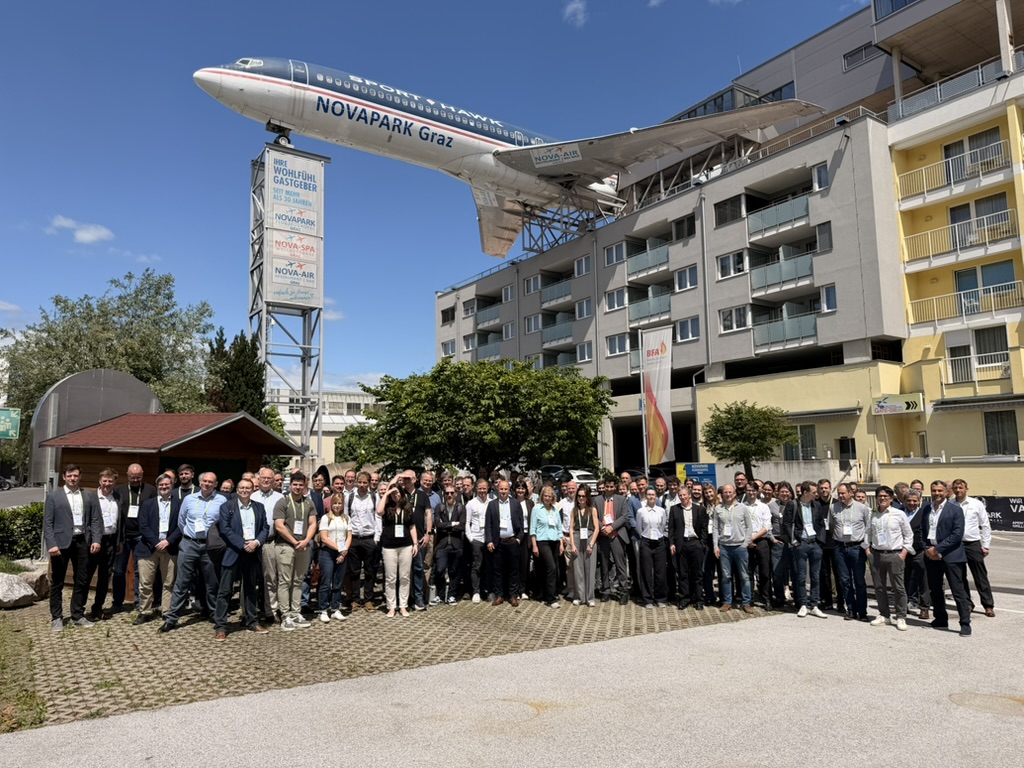
The Conference for Hyperspectral Imaging in Industry once again demonstrated the growing industrial relevance of hyperspectral imaging, offering a platform for exchange between technology providers, researchers, and end users from a broad range of sectors. Across 42 technical presentations, three keynote speeches, live demonstrations, an industrial exhibition, and dedicated matchmaking sessions, participants explored current trends and practical applications of hyperspectral imaging in fields ranging from quality control and recycling to agriculture, biomedical imaging, and defense.
Day 1: From Fundamentals to Hardware Integration OptoMedia’s ultra-compact Mini SFF brings reliable, high-speed fiber connectivity to next-generation industrial cameras. ‣ weiterlesen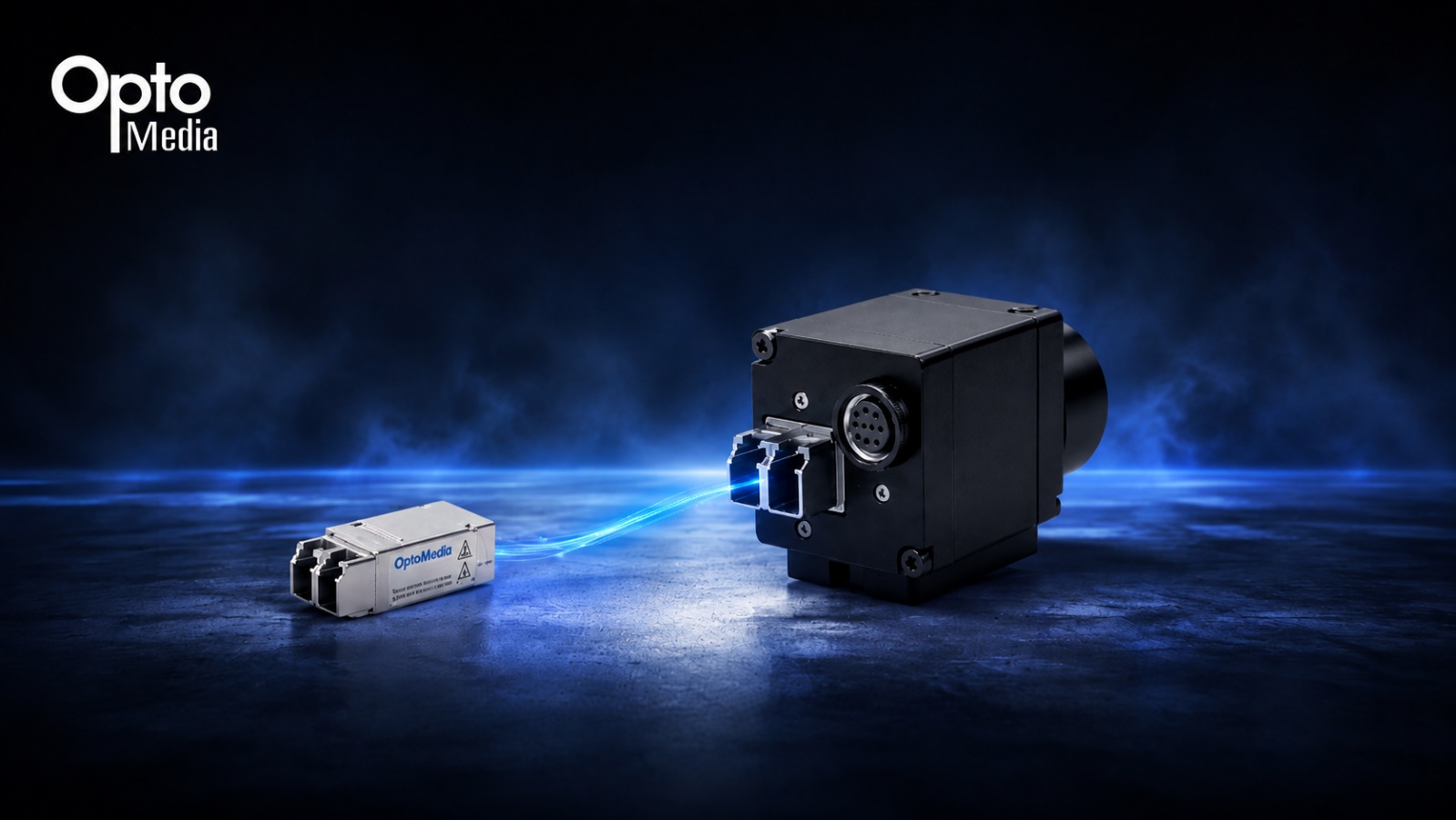
Fiber Mini SFF for GigE Vision
The conference opened with a market-focused session addressing the current needs of the spectral imaging industry, emerging market developments, and the role of AI in anomaly detection and decision-making. Presentations highlighted the transition of hyperspectral imaging from laboratory environments into scalable industrial deployment, including semiconductor manufacturing, renewable energy applications, and OEM-ready camera technologies. A key highlight of the first day was the industrial keynote by Matthias Kerschhaggl (Headwall), ‚From Principles to Practice: The Industrial Journey of Hyperspectral Imaging‘, which explored the evolution of hyperspectral imaging from research concept to industrial tool. Further sessions focused on sensor technologies and photonic innovations, including advances in SWIR sensors, compact multispectral imagers, and next-generation industrial camera platforms. Biomedical applications formed another focal point, underscored by the keynote ‚Predicting Brain Health: The Power of Retinal Scans‘ by Eliav Shaked (RetiSpec), illustrating how spectral imaging technologies may contribute to early diagnostics and brain health assessment.
Day 2: Data, AI and Applications
On the second day, discussions increasingly centered on AI, software integration, and real-time processing. Presentations covered hyperspectral imaging in standard machine vision software, AI-guided waveband selection for circular economy applications, and approaches to making hyperspectral imaging more affordable and accessible for industrial users. Additional talks addressed calibration, standardization, and hardware-software interoperability as critical enablers for reliable deployment in production environments. The final keynote by Philippe Monnoyer (VTT), “HSI for Defense: the visible part of the iceberg”, highlighted emerging defense applications of hyperspectral imaging, from material identification to advanced situational awareness. Practical demonstrators further illustrated the breadth of applications, including UAV-based real-time intelligence, combat identification, cultural heritage conservation, insect production for circular economy concepts, and FPGA-based real-time data processing.